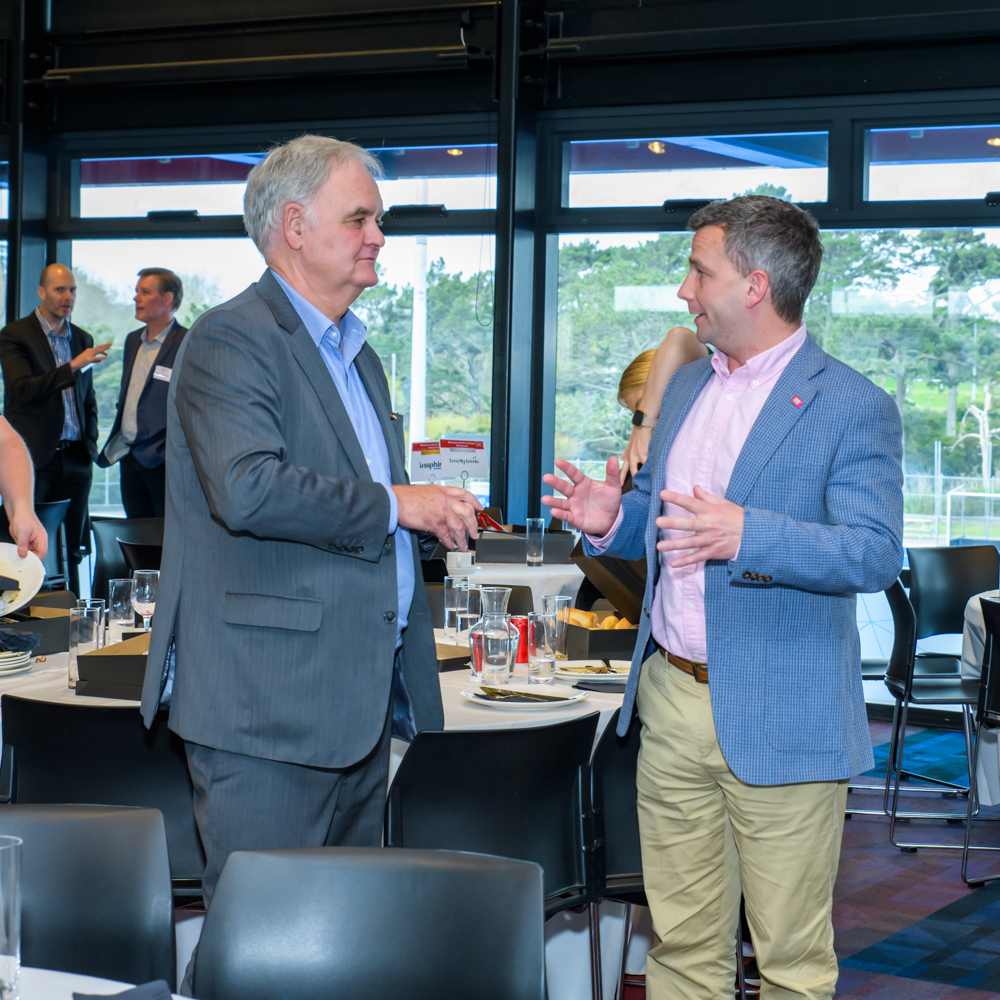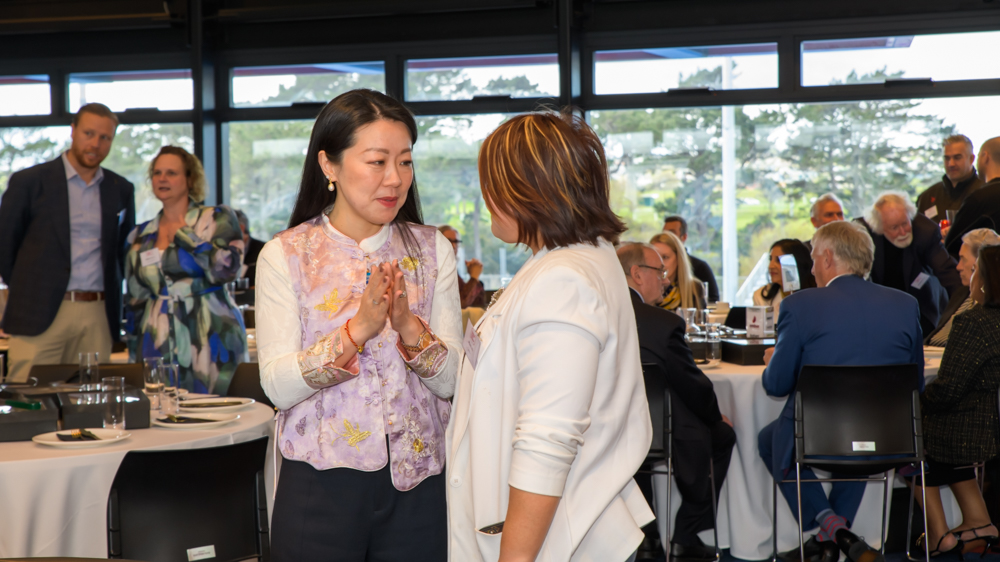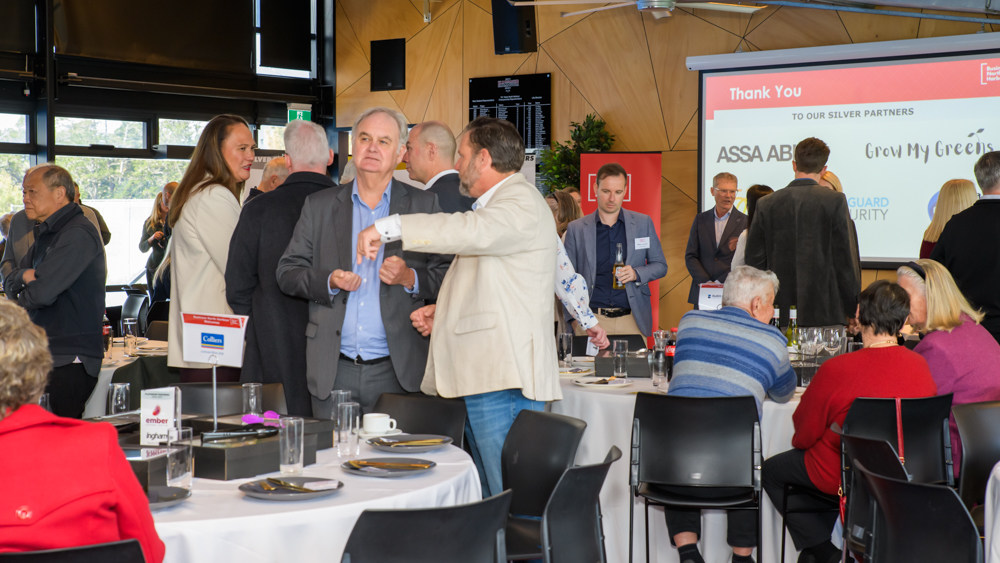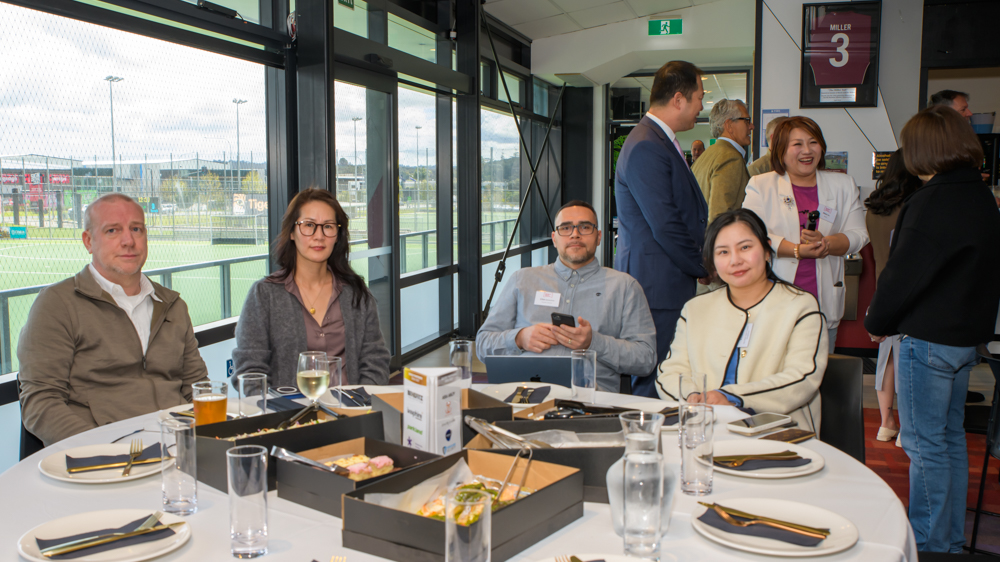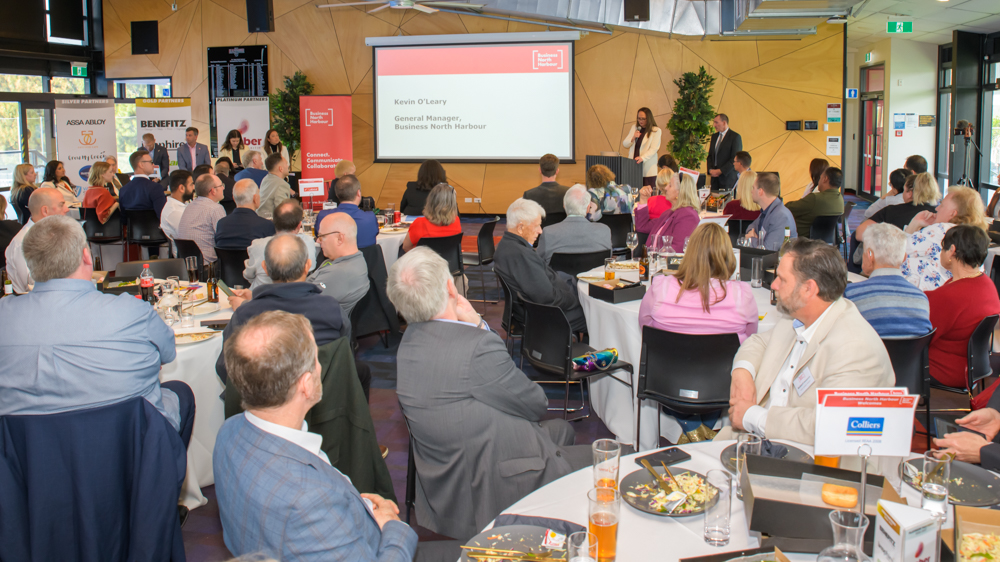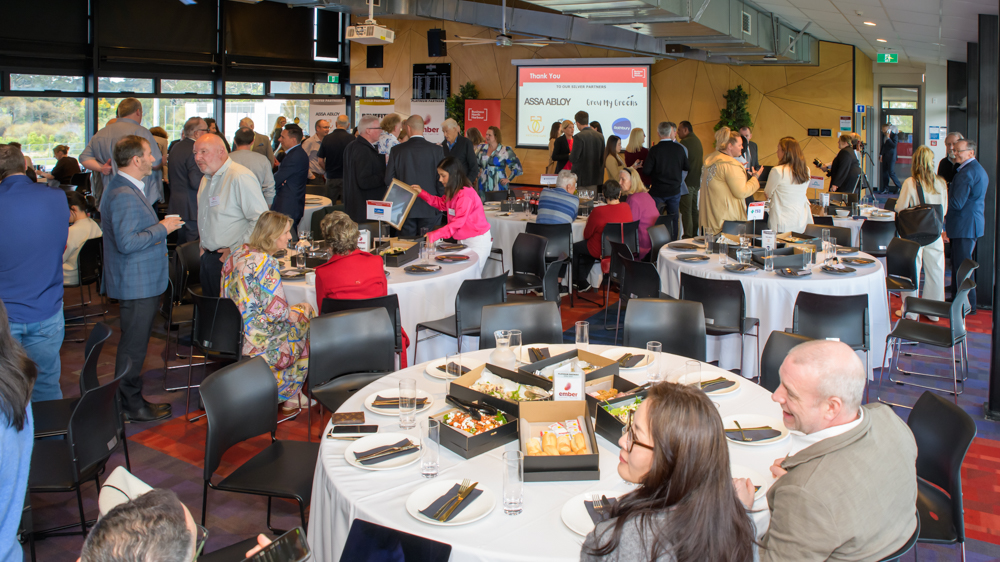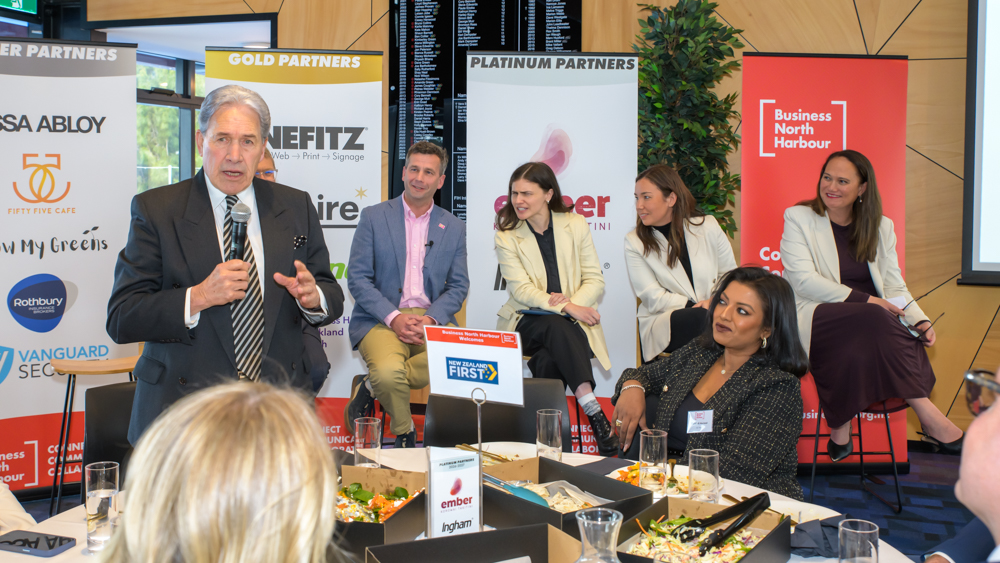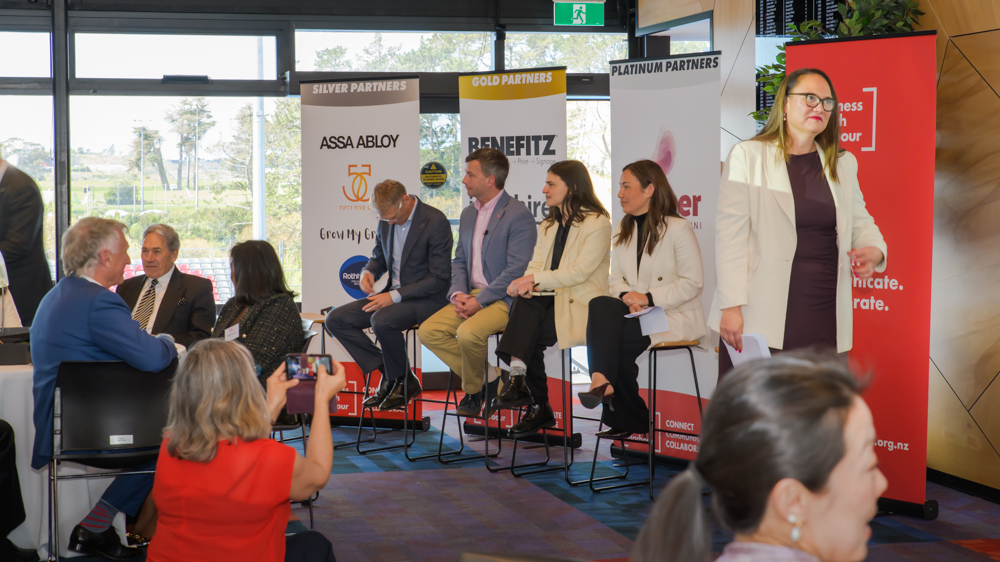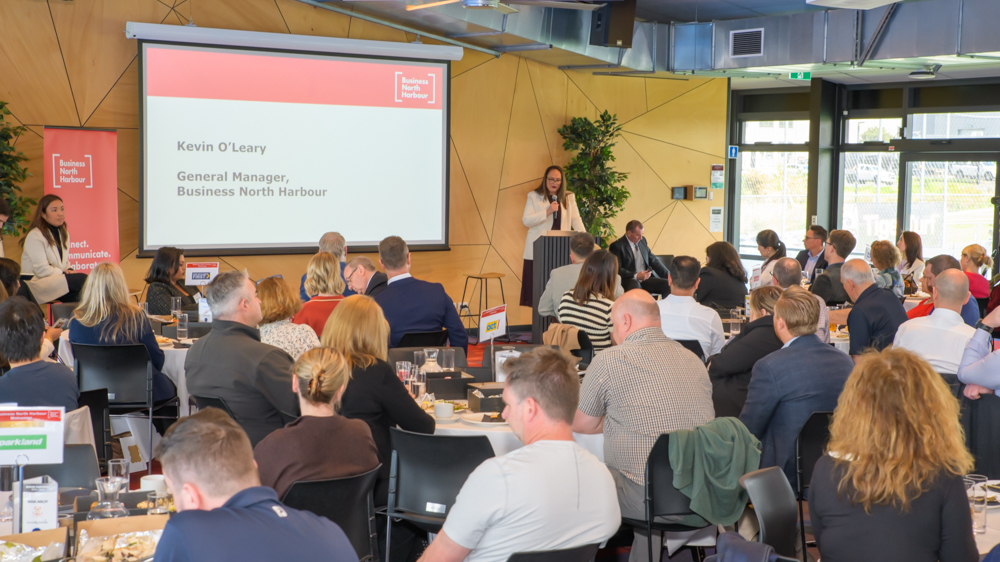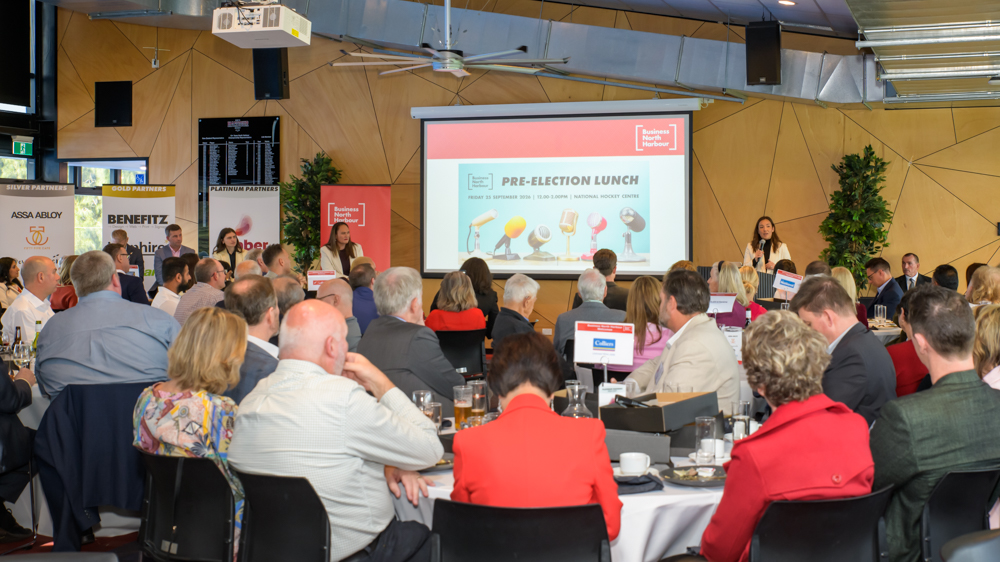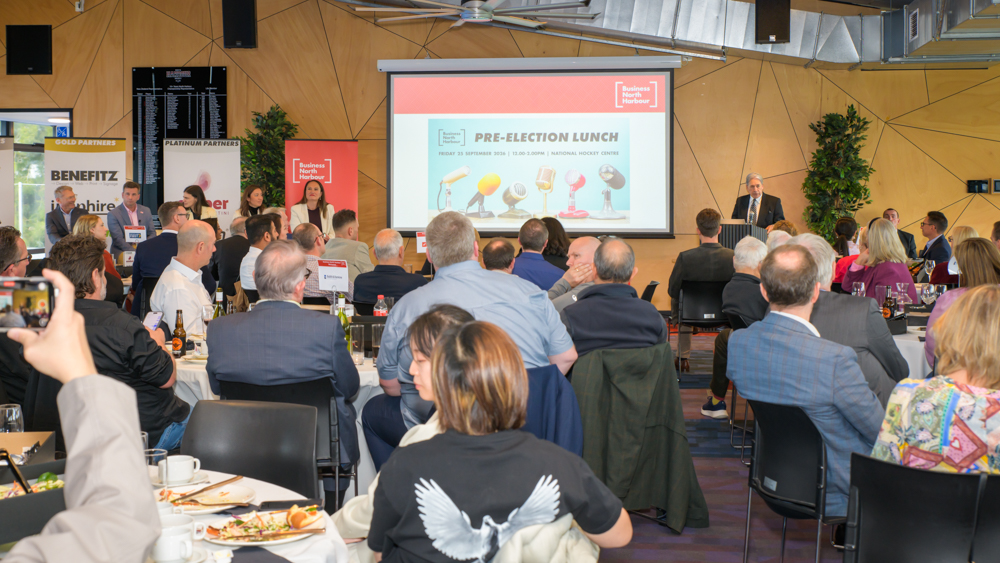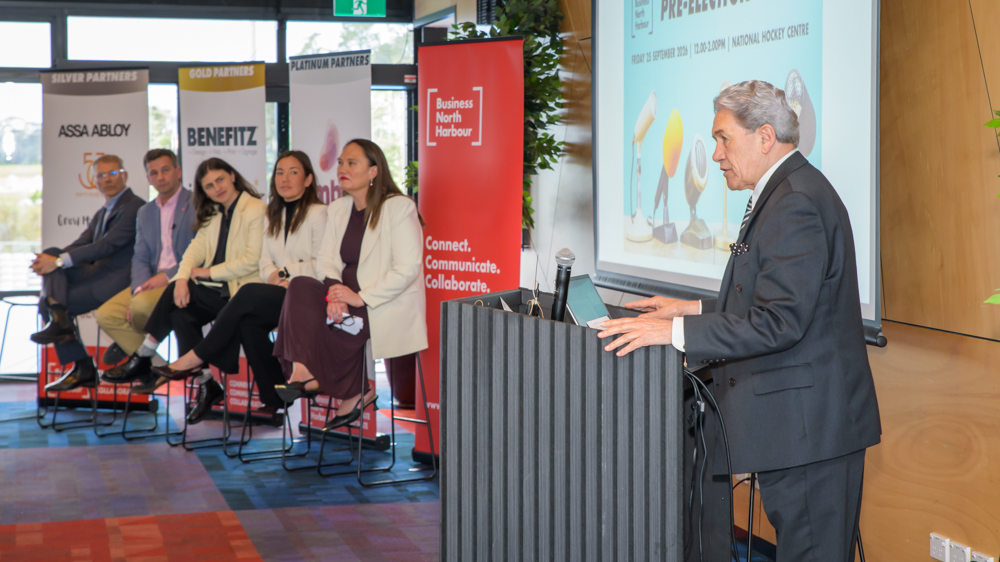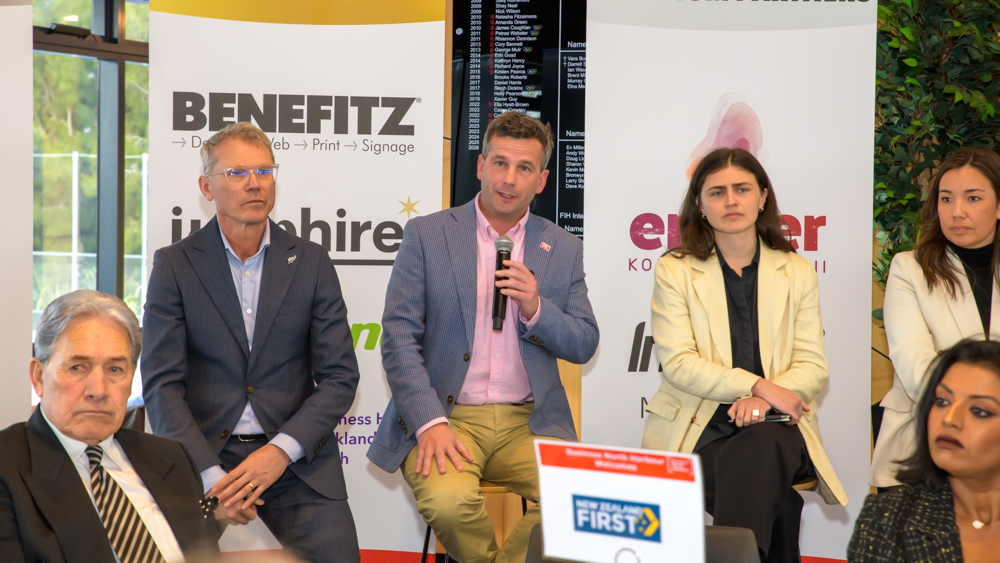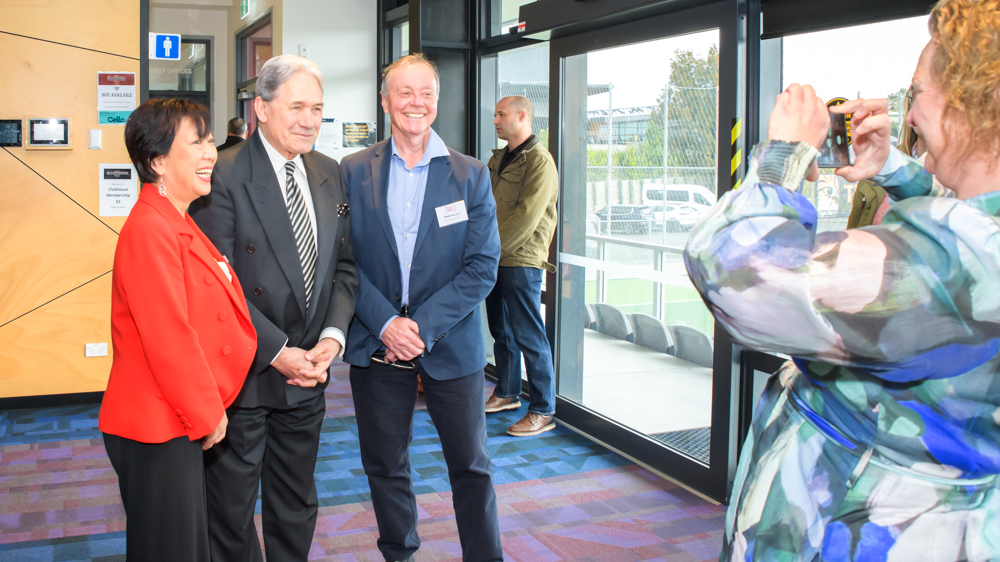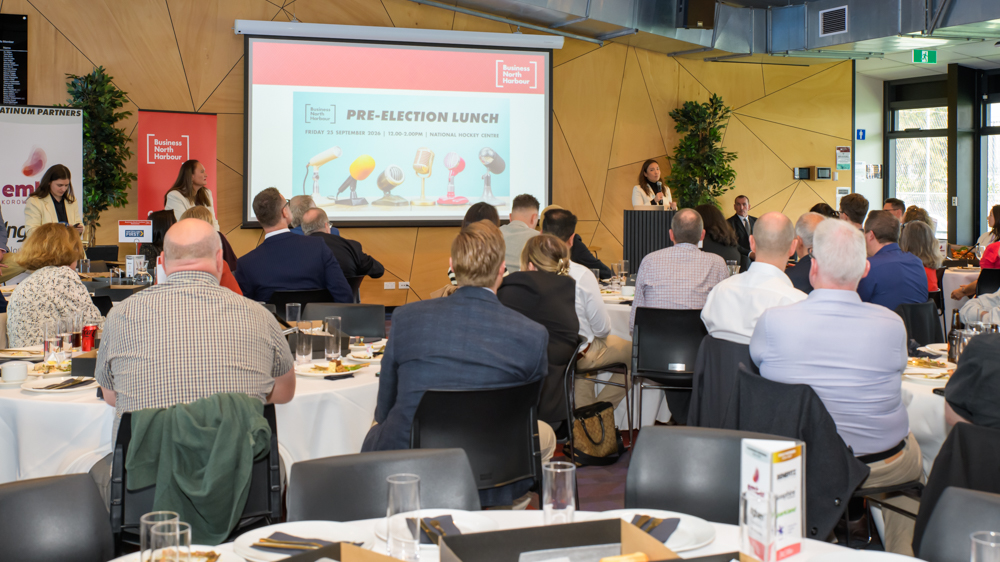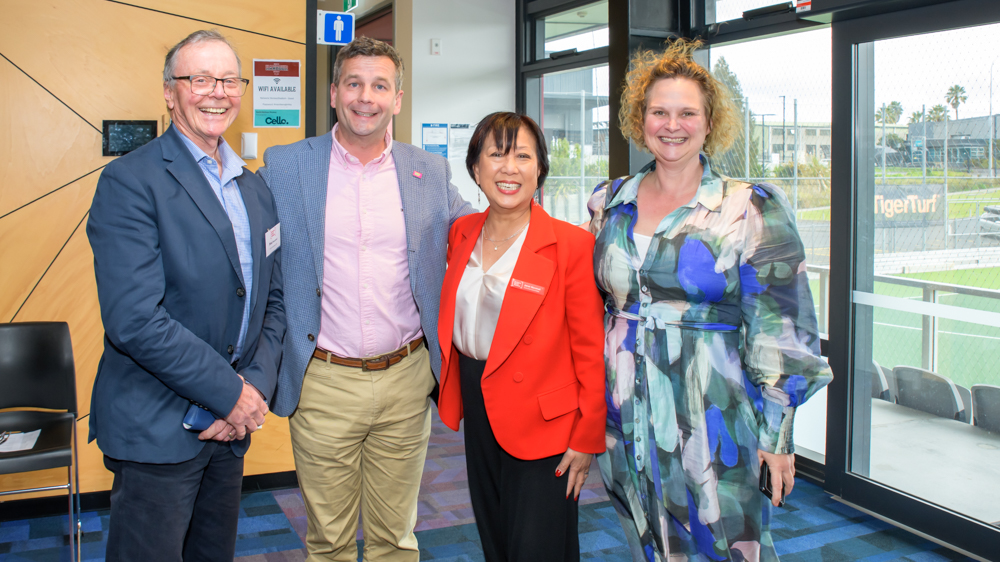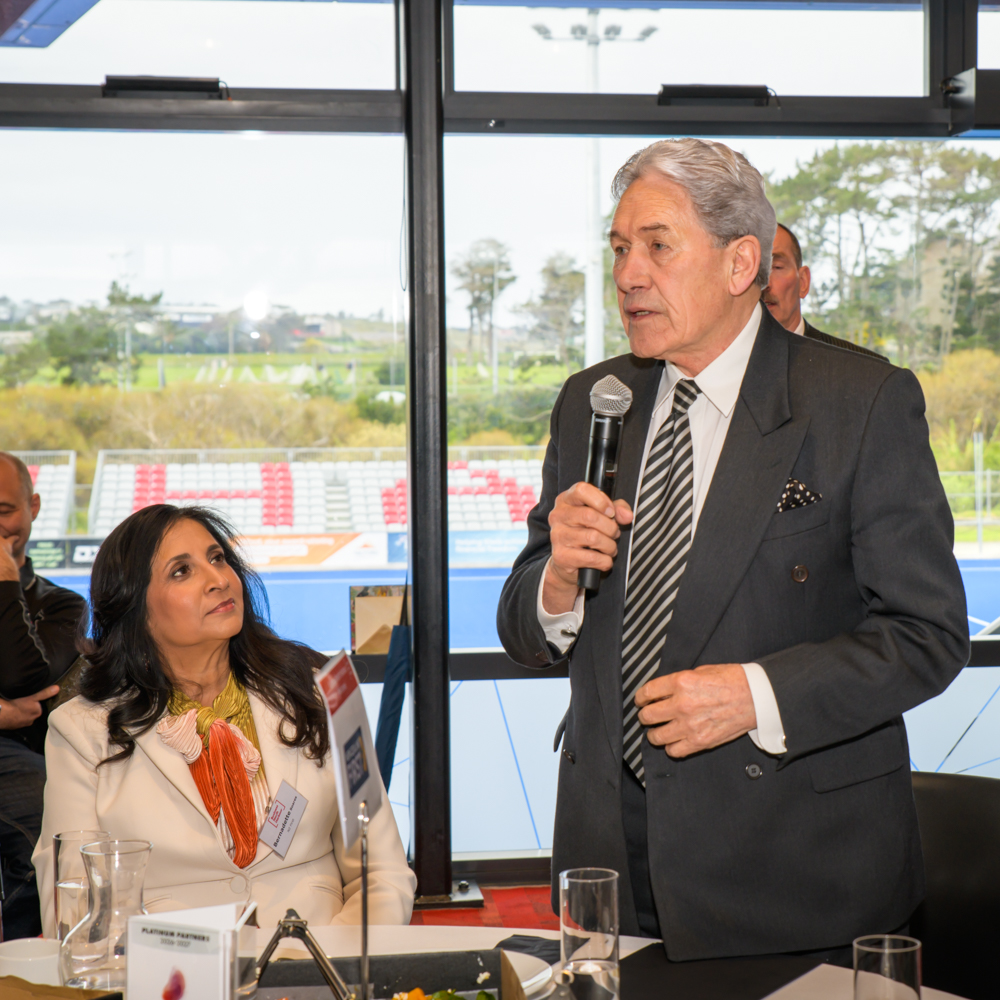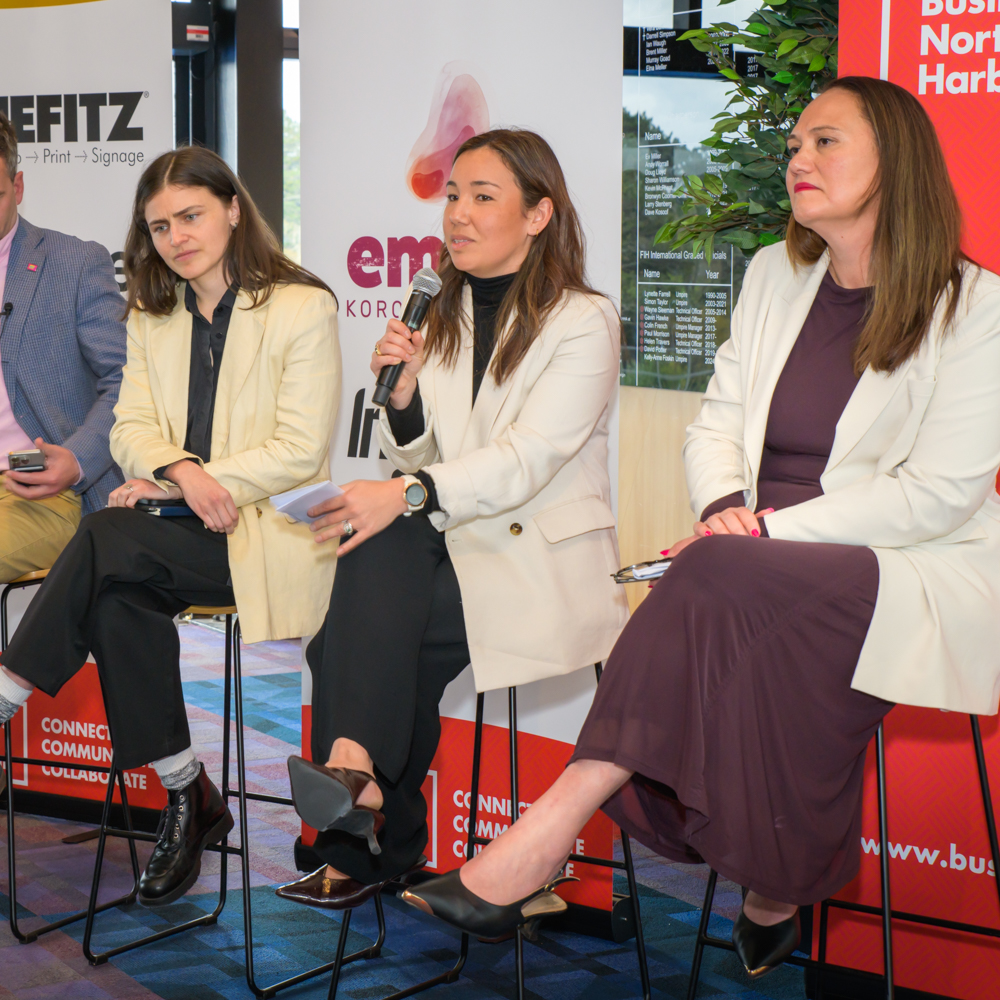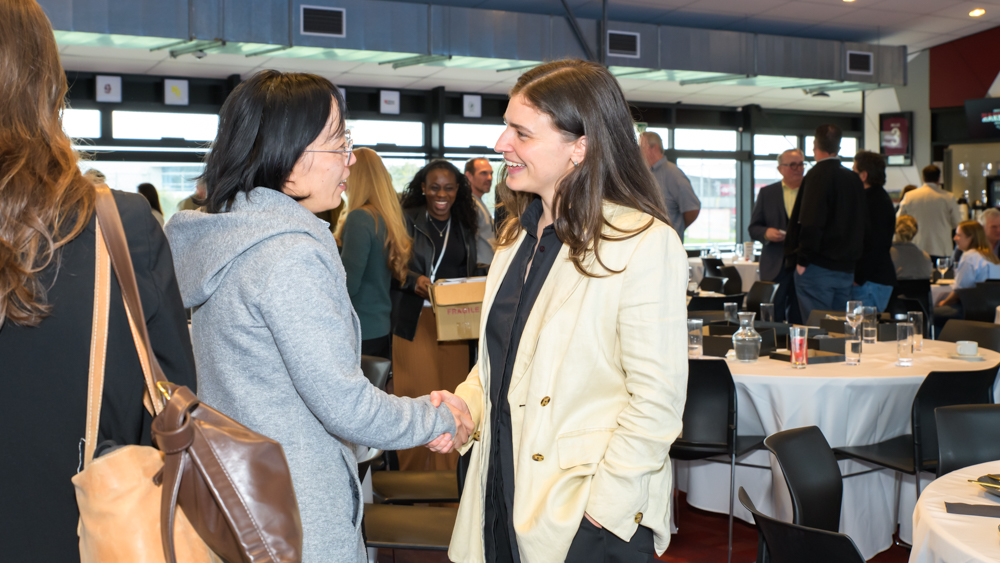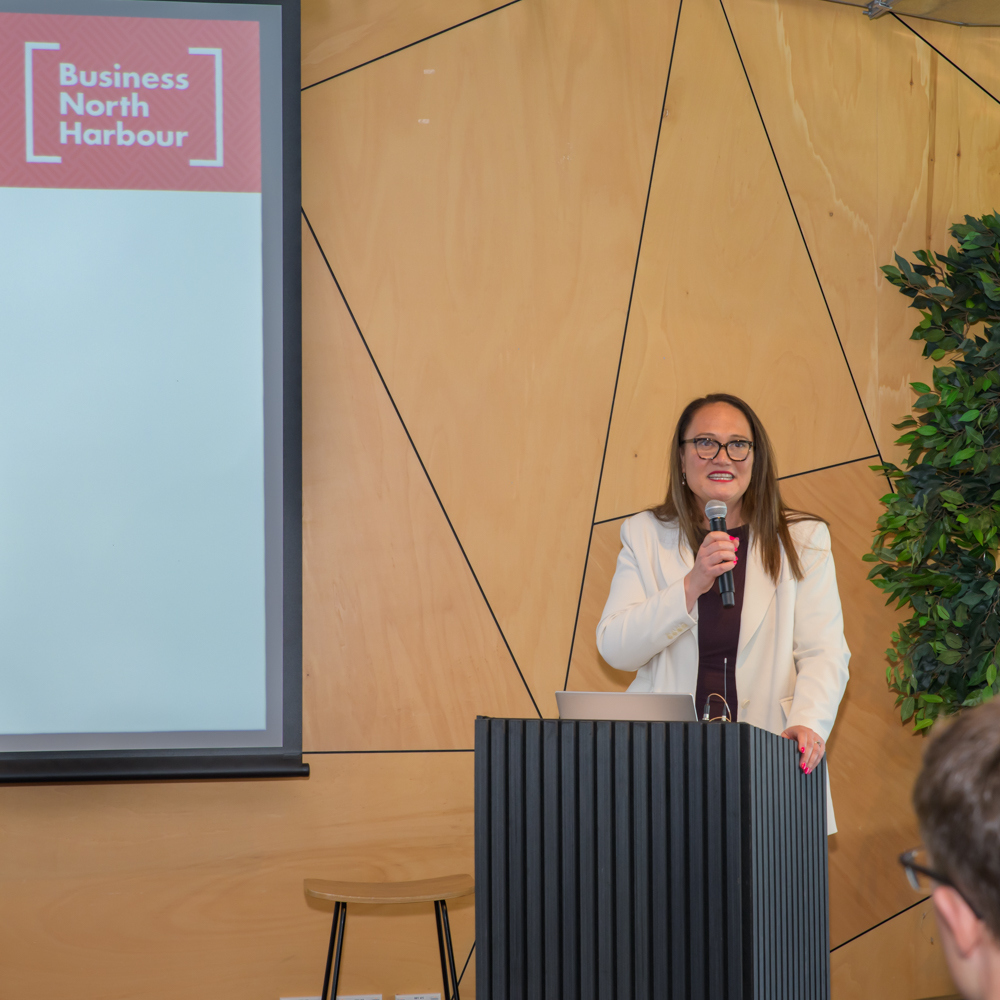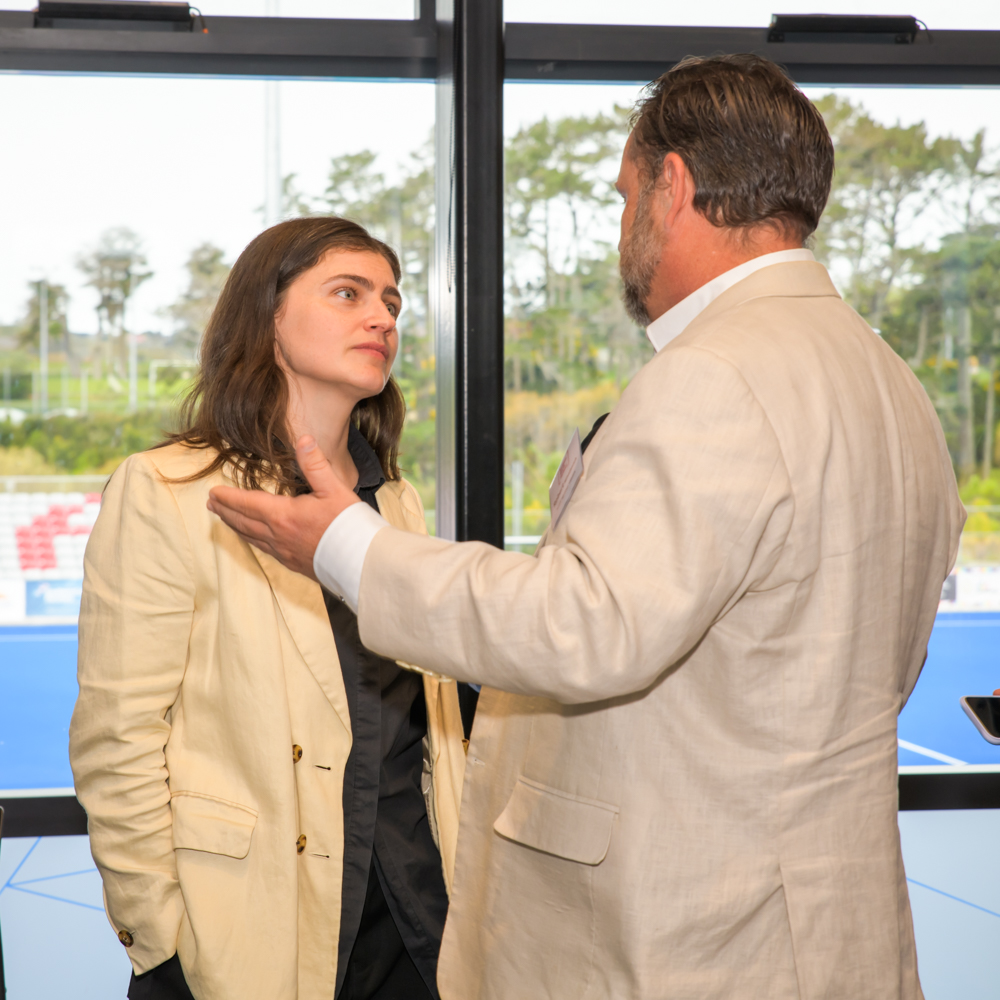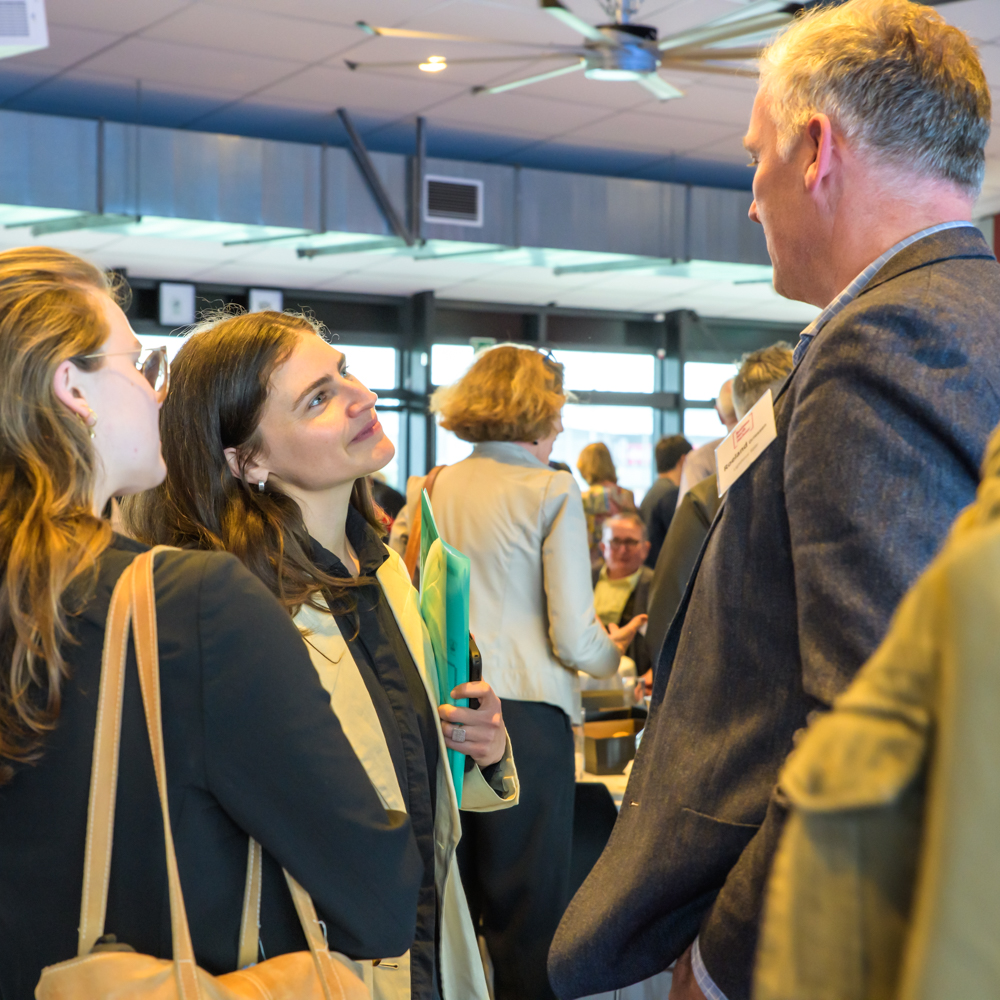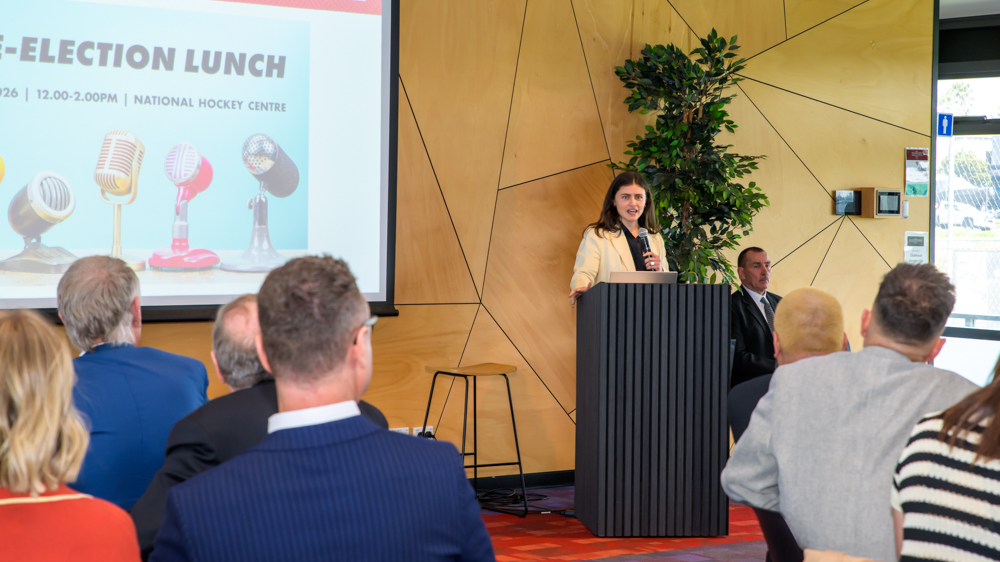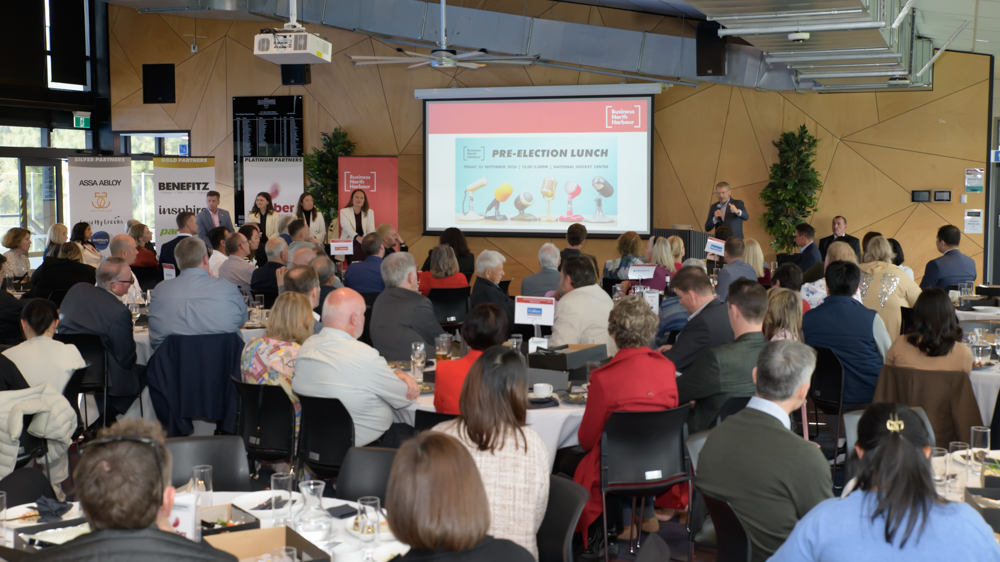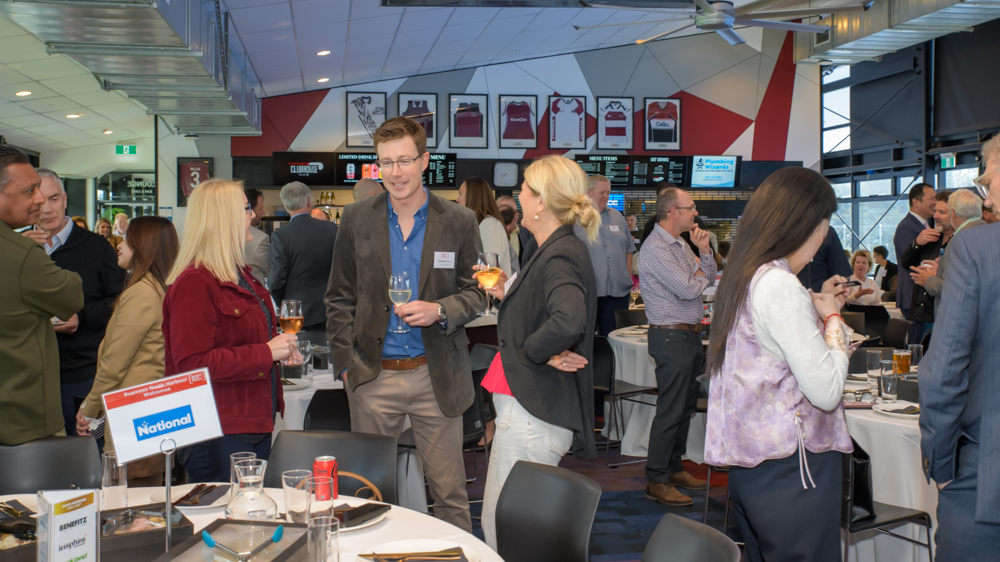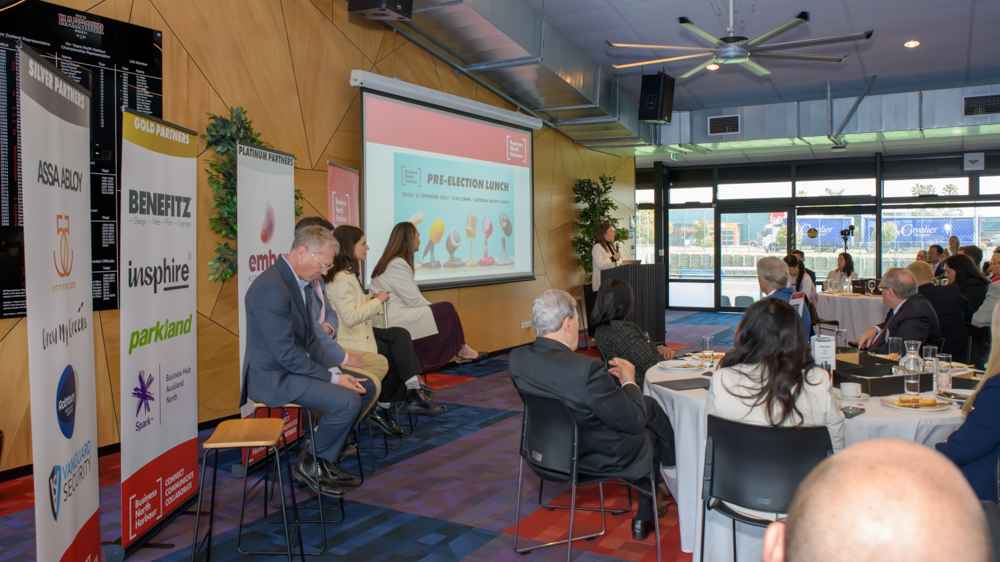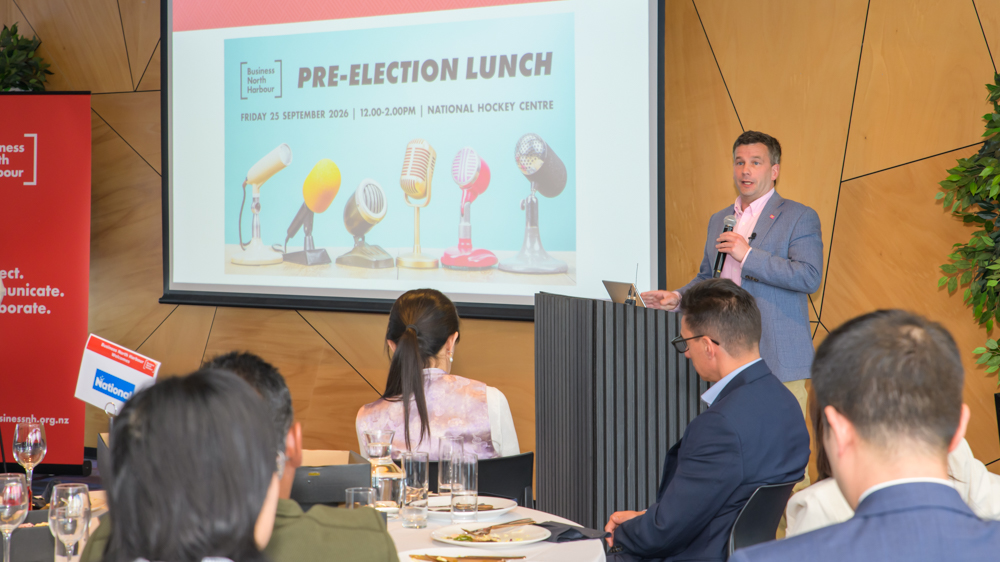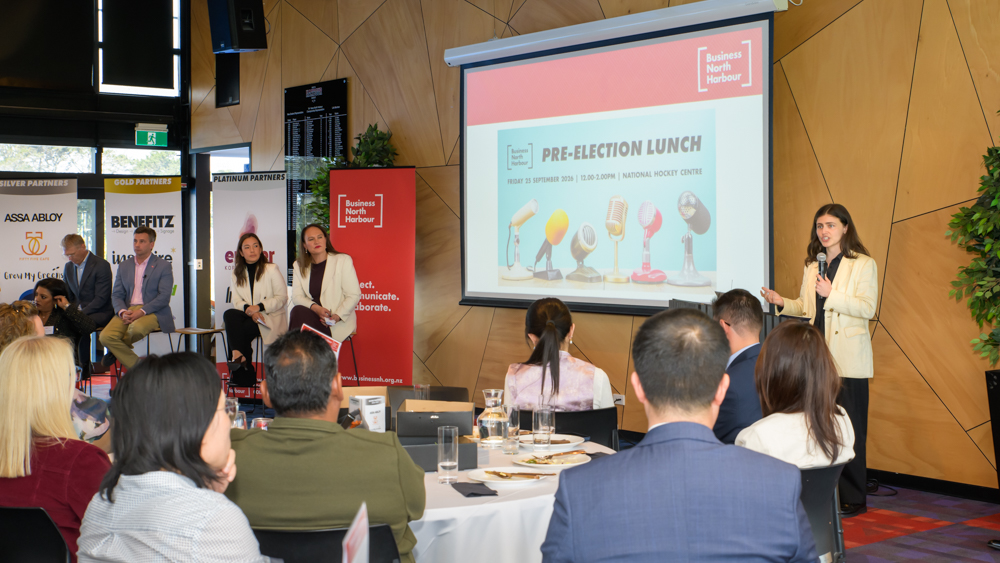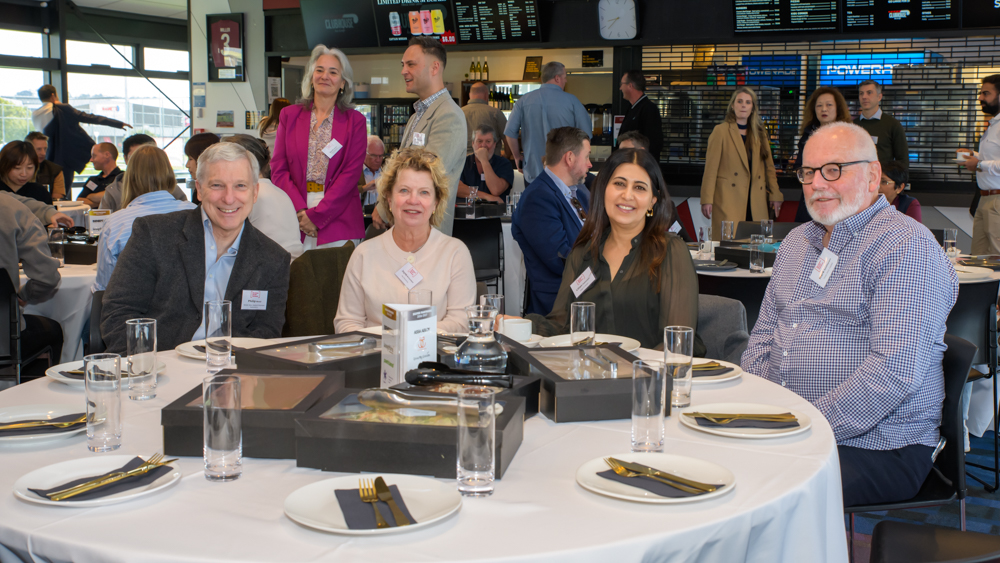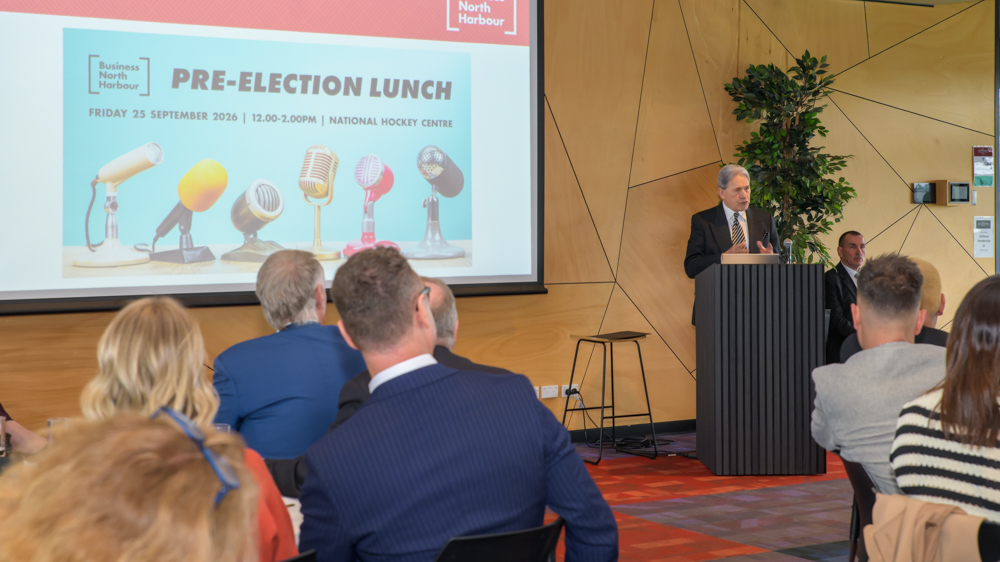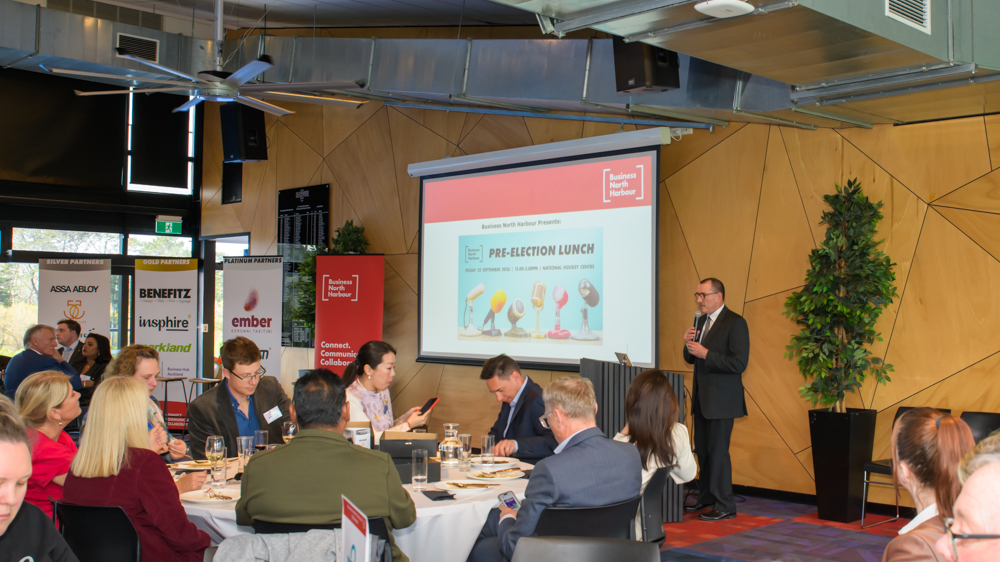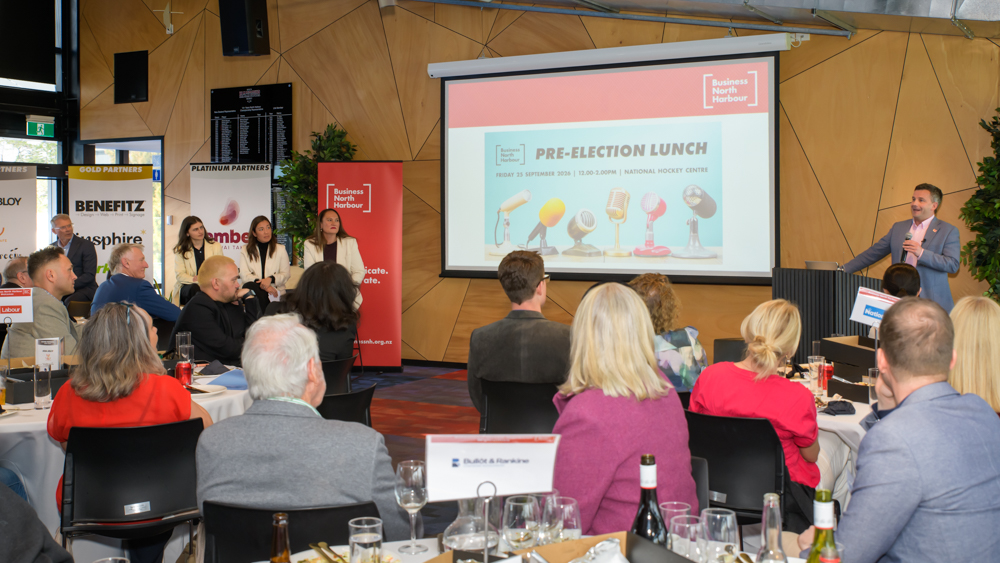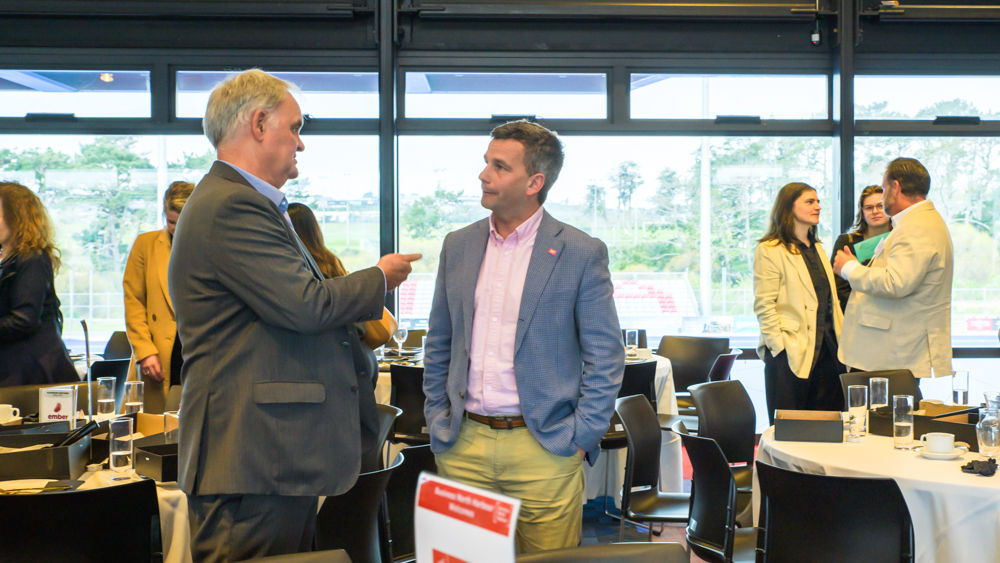
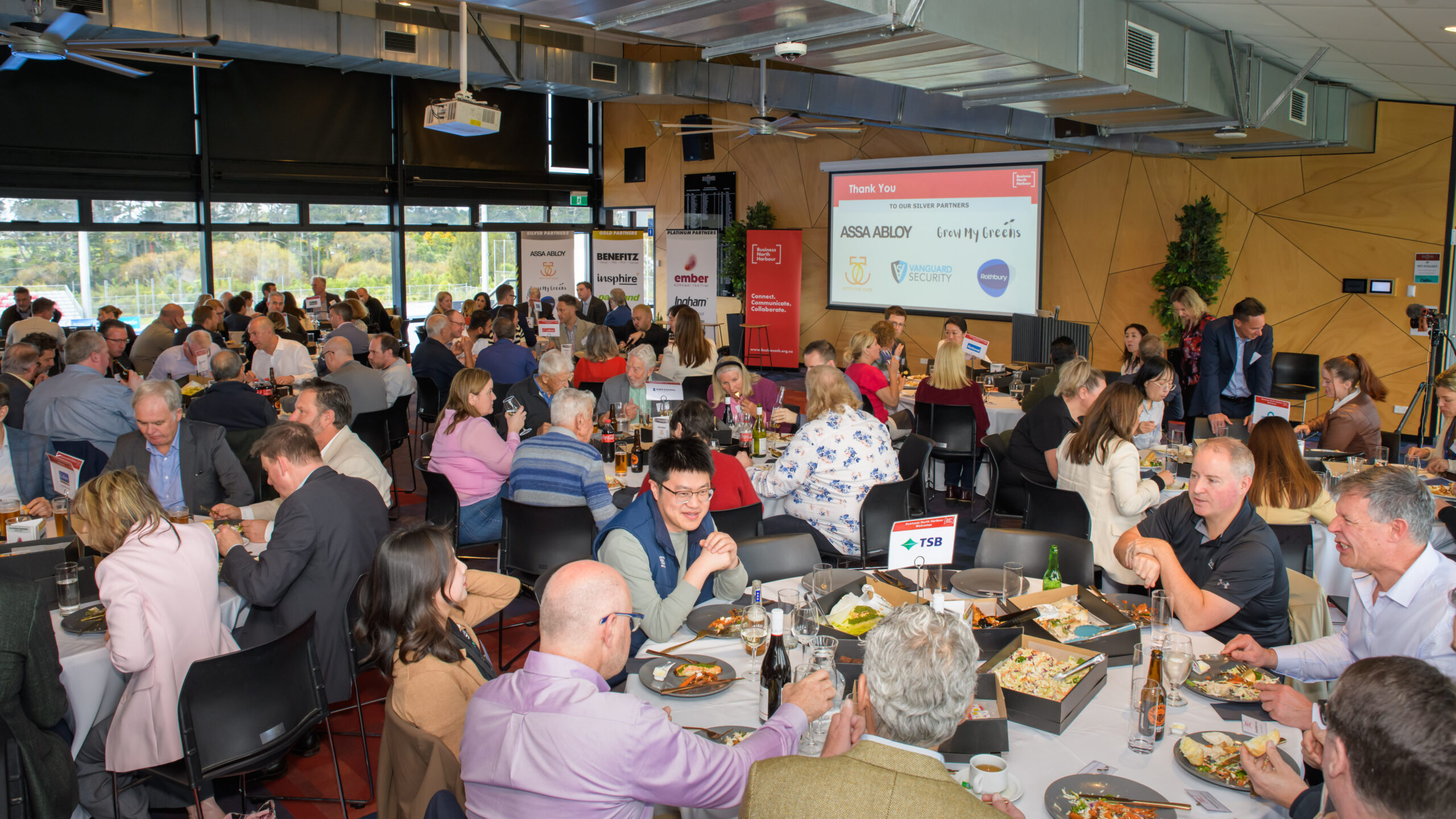
Business North Harbour General Manager Kevin O’Leary opened the luncheon by acknowledging the difficult conditions many local businesses continue to face. While some organisations are stabilising, he noted that others are still “doing it tough,” making the direction of the next government important for sustainable recovery and long-term growth.
He said the “light flickering dimly at the end of a long tunnel” for many businesses must not be allowed to go out, and emphasised the need for policies that help businesses move from surviving to thriving.
Kevin outlined the event format: each political representative would have six minutes to present their priorities, followed by a Q&A session and he hoped economic recovery would feature strongly in their remarks.
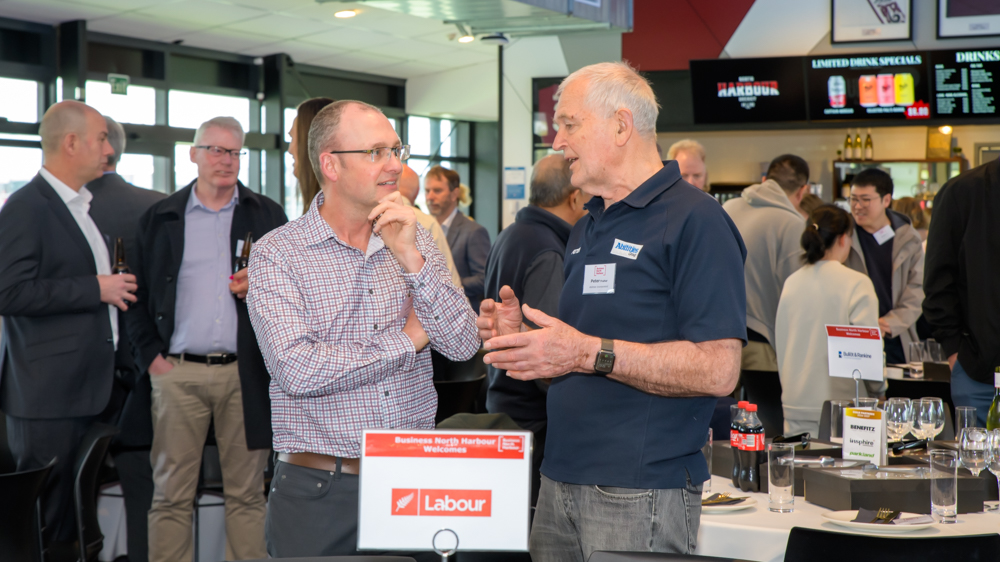
Hon Carmel Sepuloni — New Zealand Labour Party

Carmel began her speech by acknowledging the difficult conditions many Business North Harbour members continue to face, noting high costs, cautious customers, and tight cashflow pressures for small businesses. She highlighted that many business owners are carrying personal risk, managing wages, invoices, and uncertain workloads month to month.
Sepuloni contrasted Labour’s approach with the current government’s record, saying businesses had been promised growth but were instead seeing closures, rising unemployment, and more New Zealanders leaving for opportunities overseas. She stated Labour’s view that economic growth cannot be achieved through cuts alone.
She outlined Labour’s proposals to support small businesses, including requiring large companies to pay invoices under $25,000 within 15 days, lifting the instant asset write-off threshold to $10,000, and increasing the GST registration threshold to $80,000. Labour would also target 15% of government contracts for small businesses and break larger contracts into smaller components where appropriate.
Sepuloni linked household cost pressures to business performance, highlighting Labour policies aimed at easing living costs, such as capped public transport fares and increased access to GP visits. She also emphasised Labour’s commitment to construction and infrastructure investment, apprenticeship support, and a future fund to back innovative New Zealand businesses.
She concluded that Labour’s focus is on helping businesses invest, hire, and grow.
Qiulae Wong — The Opportunities Party
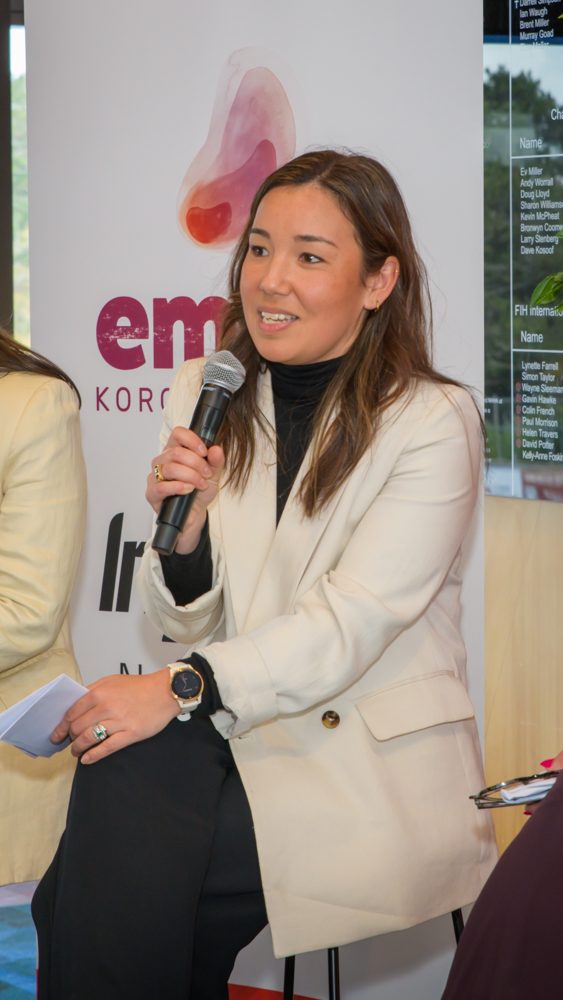
Qiulae Wong began by noting that she is not a career politician, but someone who has spent her career in the private sector and believes strongly in the ability of business to drive positive social and environmental outcomes. She reflected on her early work on the “Be Accessible” campaign, which encouraged businesses to improve accessibility for people with disabilities, an experience that shaped her view of business as a force for inclusion and innovation.
Wong described her career working with small and medium-sized enterprises and later with KPMG, where she supported companies preparing for climate-related reporting. She said many business leaders recognised the value of investing in decarbonisation, but that regulatory uncertainty following the 2023 change of government stalled progress. In her view, businesses need consistent long-term direction from government rather than day-to-day intervention.
She outlined The Opportunities Party’s 2026 manifesto, built on three pillars: unity, innovation, and nature. Key priorities include improving productivity through increased investment in research, development, science, and technology; strengthening competition by giving the Commerce Commission greater enforcement powers; and modernising incentives around biodiversity, fisheries management, and renewable energy.
Wong concluded by emphasising the need for cross-party collaboration and long-term planning, saying TOP aims to use its influence to bring parties together on major national challenges.
Chlöe Swarbrick — Green Party

Chlöe Swarbrick spoke as Green Party co-leader and MP for Auckland Central, noting that businesses continue to operate in the wake of global shocks, from the pandemic to fossil fuel volatility and high interest rates. She said these pressures highlight the need for New Zealand to focus on what it can control: investing in a resilient health system, decarbonising the economy, and building long-term stability.
She outlined the Greens’ priorities of affordable lives, healthy nature, and honest politics, saying many New Zealanders want credible, practical action to lower living costs and improve quality of life. Swarbrick emphasised the need for a modern industrial strategy and significant investment in infrastructure, climate resilience, and education.
A major part of her remarks centred on tax reform. She said New Zealand must be willing to have “a sensible and not hysterical, but evidence-based discussion on tax and on debt.” Swarbrick highlighted the Greens’ proposed wealth tax, a levy on individual net assets above $10 million as a fair, targeted way to broaden the tax base without increasing costs for everyday New Zealanders or small businesses. She argued it would help address wealth inequality, fund essential infrastructure, and unlock investment in renewable energy and climate adaptation. She noted strong public support, including among some business leaders.
Swarbrick concluded by calling for cross-party cooperation and a focus on shared national goals.
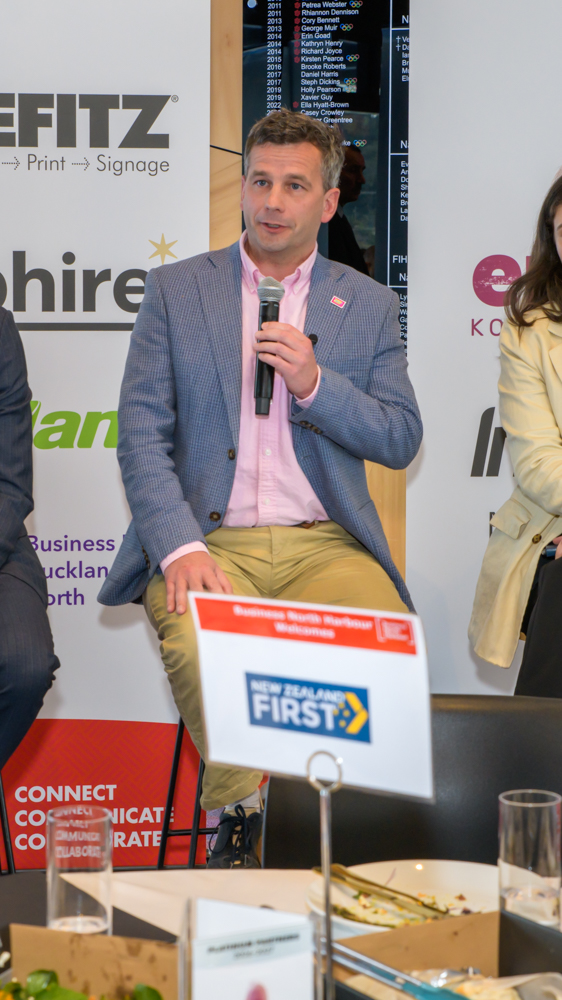
Hon David Seymour — ACT New Zealand
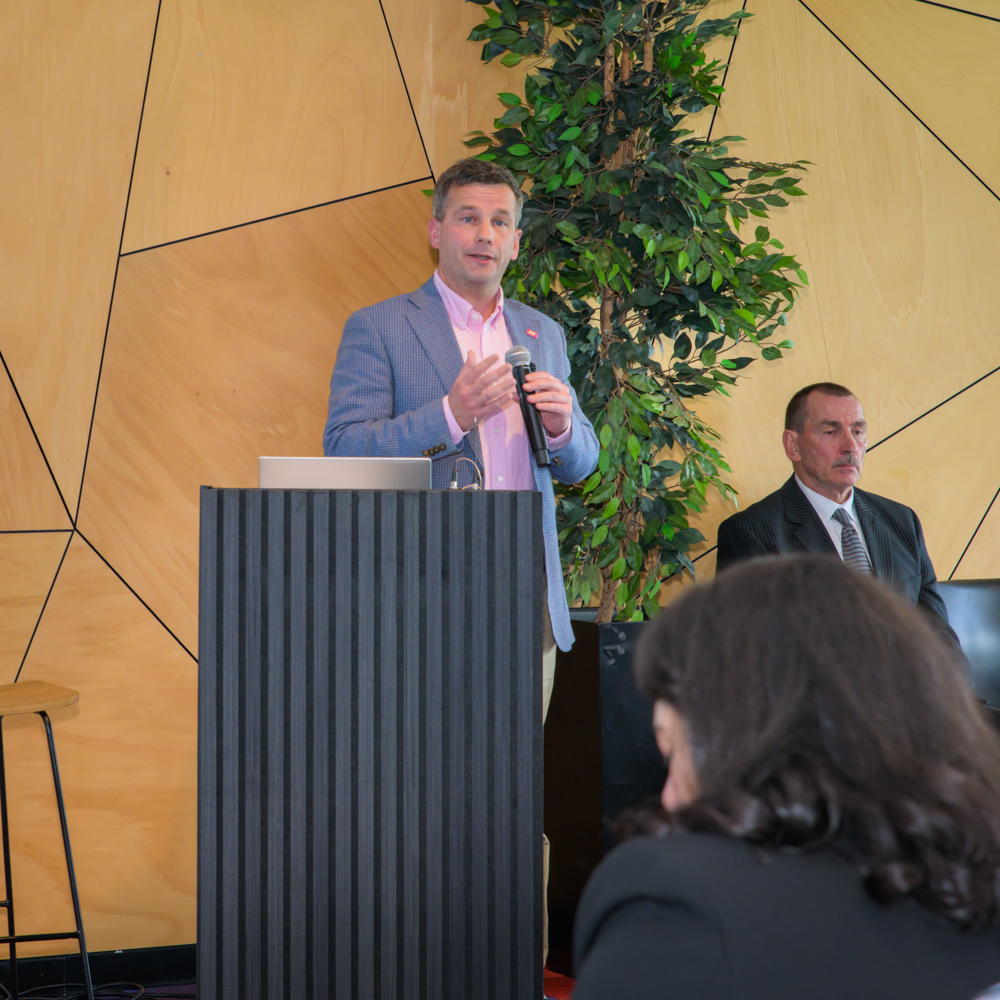
Hon David Seymour acknowledged the pressures facing business owners, noting the sacrifices many have made through prolonged economic uncertainty. He said New Zealand must retain confidence in its future, emphasising that “it’s worth waiting, saving and sacrificing today in order to make tomorrow better.”
Seymour focused heavily on fiscal discipline and the influence of global bond markets. He argued that high levels of government borrowing mean New Zealand must demonstrate stronger financial restraint to remain credible internationally. In his view, bond markets will increasingly pressure governments to reduce spending, and New Zealand will need to adjust to avoid higher borrowing costs.
He reiterated ACT’s position that the budget can be balanced without introducing new taxes, saying this would require reducing the size of government, including fewer ministries and departments. Seymour framed this as necessary to ease interest rate pressures and improve access to capital.
At a microeconomic level, he highlighted employment law as an area he believes is creating barriers for businesses. Seymour argued that current rules make it too difficult for employers to fire employees, describing the process as more complex than “getting a divorce.”
Seymour concluded by saying long-term confidence depends on disciplined economic management and avoiding policy decisions that unsettle financial markets.
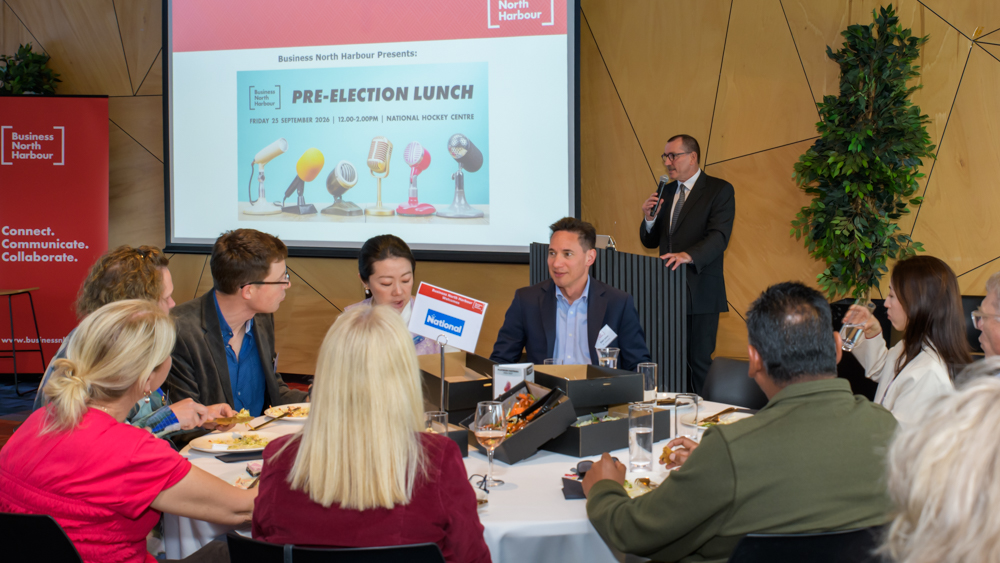
Hon Paul Goldsmith — New Zealand National Party
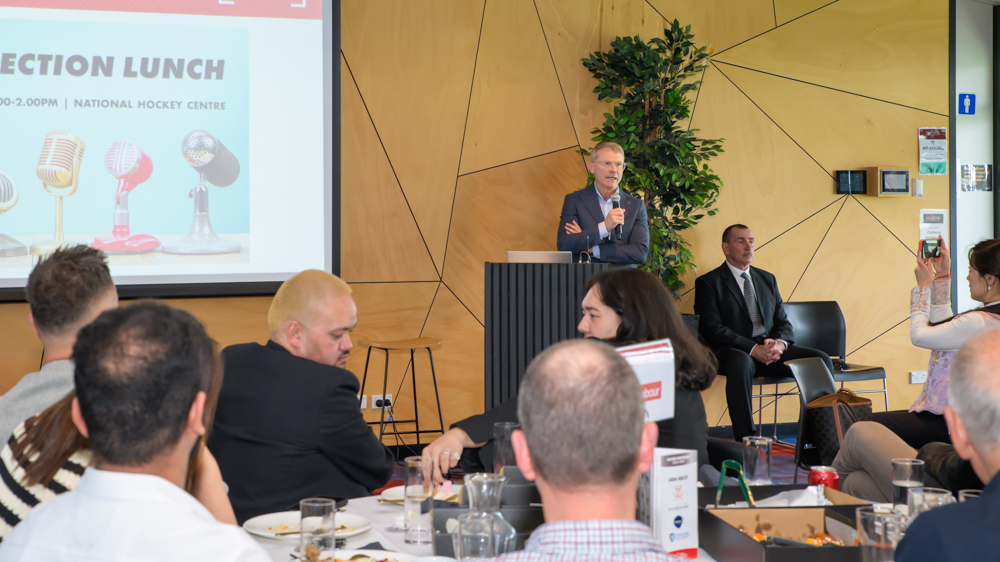
Hon Paul Goldsmith began by acknowledging the contribution of small business owners, describing business as a form of public service grounded in delivering value to customers. He said the government aims to make operating conditions easier where possible.
Goldsmith reflected on the past three years of coalition government, noting that despite differences between the parties, he believes the three-way coalition has worked effectively under the leadership of the Prime Minister. He outlined the challenges the government inherited, including high inflation, interest rates, debt, concerns about public safety, low school attendance, and pressure on the health system.
He highlighted areas where he believes progress has been made: inflation easing, interest rates stabilising, and a pathway back to surplus established. Goldsmith said this fiscal position is important for a small, globally exposed country facing uncertainty in international markets.
As Justice Minister, he emphasised improvements in law and order, including fewer victims of crime and reduced ram raids. He also pointed to work underway in education and health to improve attendance, strengthen curriculum expectations, and reduce wait times for key services.
Goldsmith outlined National’s growth plan, centred on sound economic management, encouraging investment, expanding international trade opportunities, improving infrastructure, and reducing regulatory barriers
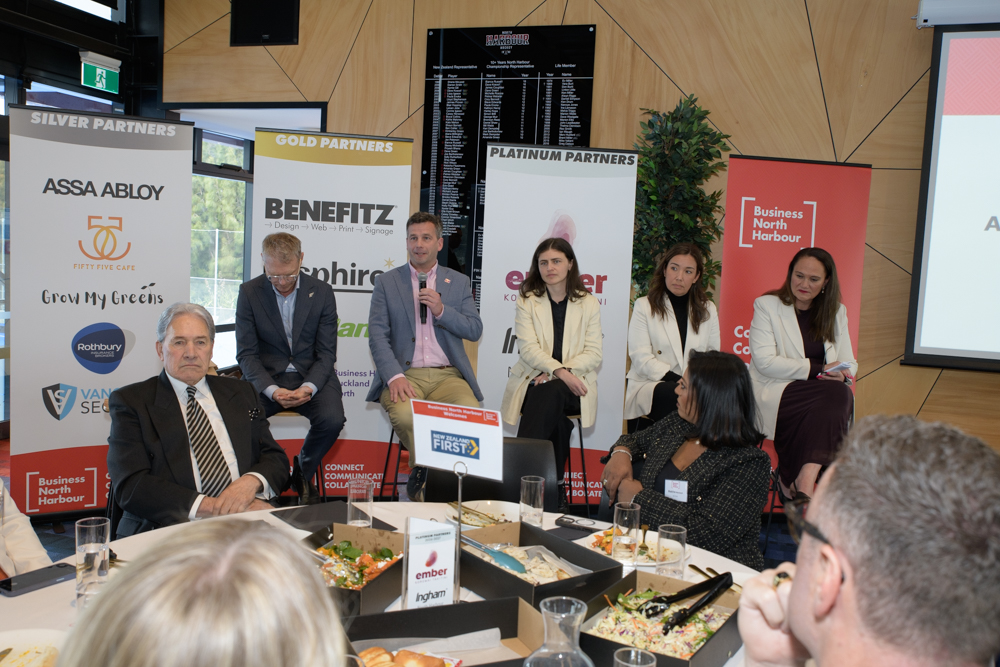
Rt Hon Winston Peters — New Zealand First
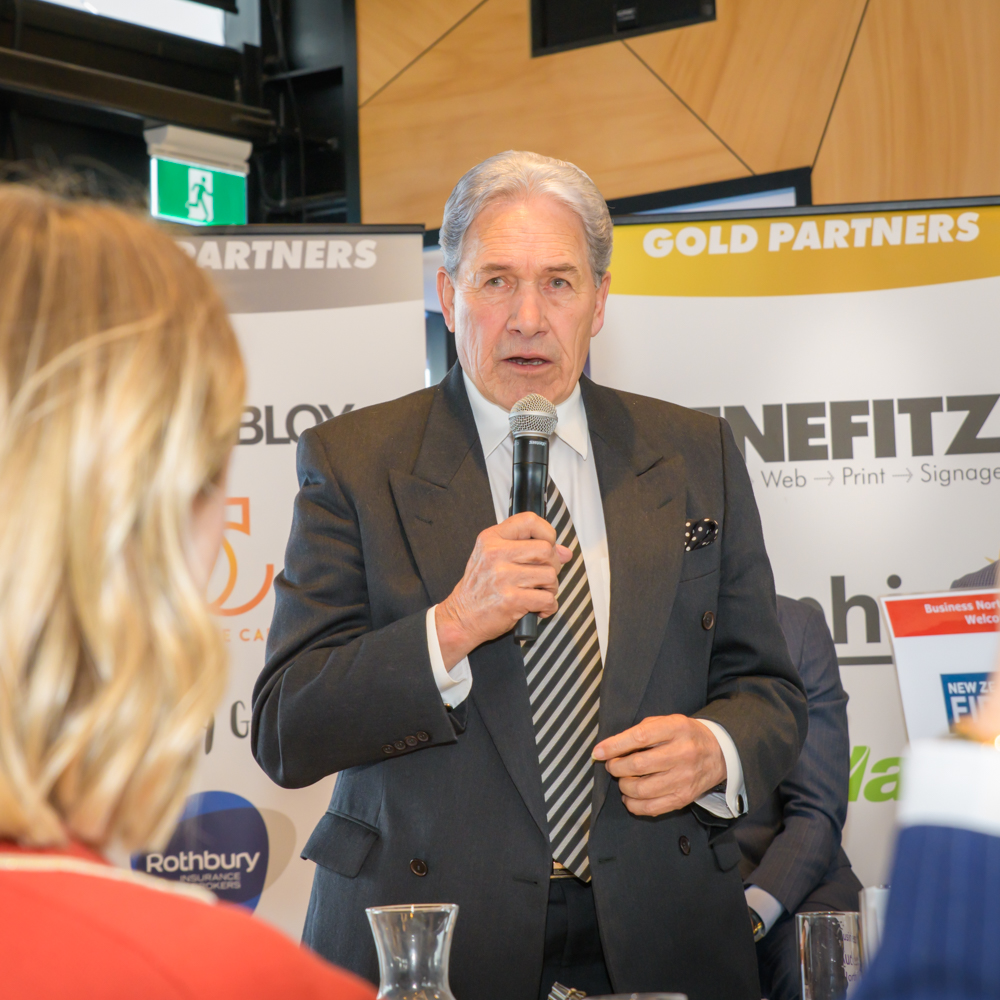
Rt Hon Winston Peters centred his remarks on the significance of the upcoming election and what he sees as major risks to New Zealand’s long-term economic direction. He described the 2026 election as critical for managing inflation and maintaining economic stability, arguing that poor decisions could have lasting consequences for future generations.
Peters spoke about government expenditure, taxation, and the need for clearer accountability in public spending. He criticised what he views as past fiscal mismanagement and emphasised the importance of disciplined investment, particularly in essential infrastructure, energy, and banking systems.
Throughout his speech, Peters expressed strong concerns about the current political environment. He referred to what he sees as “extreme” ideological positions in Parliament, mentioning terms such as communism, apartheid, and describing some politicians as “entitled idiots and “clowns”. He then criticised spending 280 million on light rail and called the Business North Harbour Audience crowd the “Mother Teresa of the North Shore” for smiling and not being infuriated.
Peters outlined New Zealand First’s proposals to support business, including reducing the company tax rate for firms with turnover under $30 million and improving depreciation settings. He also highlighted the need for immigration policies focused on skills in demand.
He concluded by saying the election represents a pivotal moment for restoring stability and strengthening New Zealand’s economic foundations.
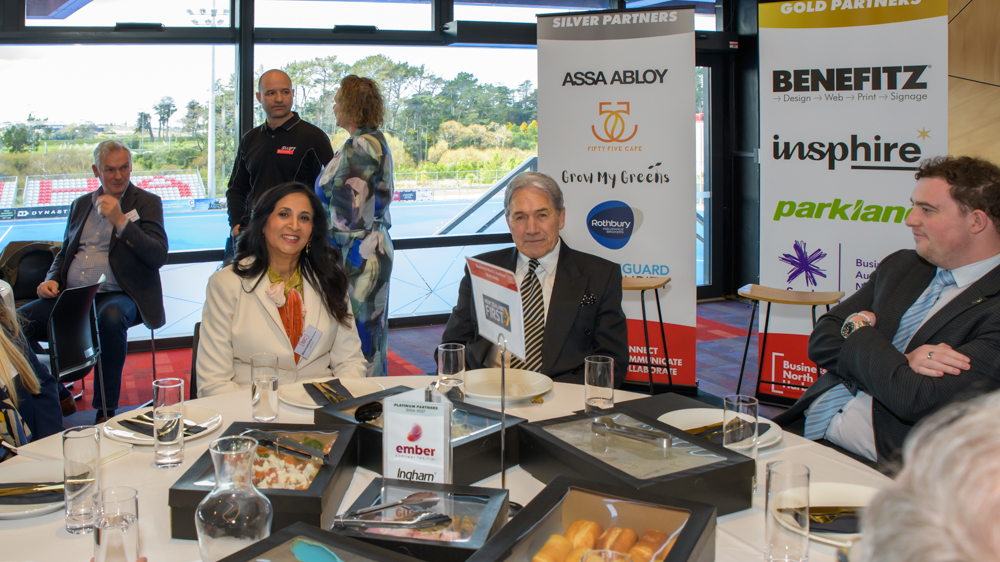
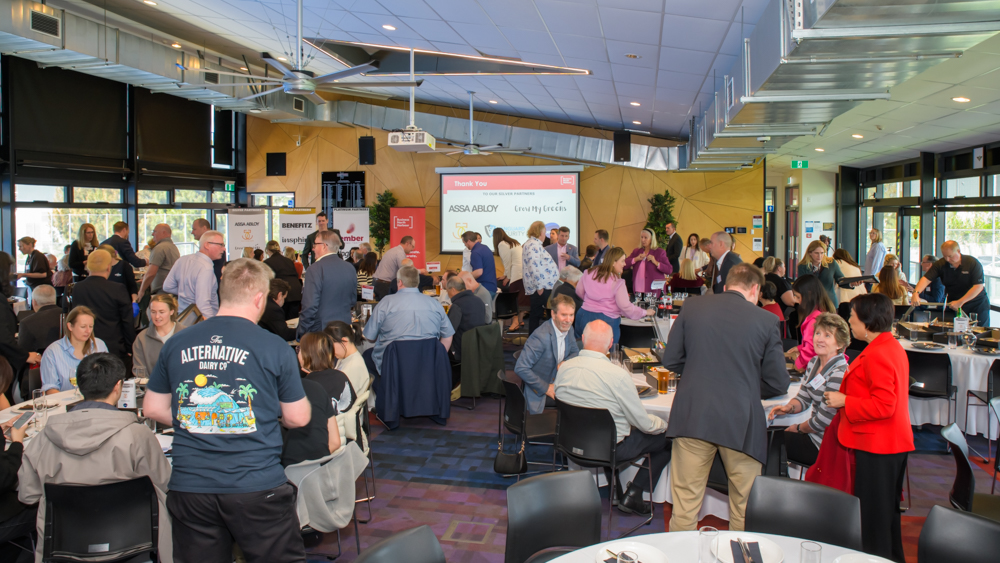
Business North Harbour extends its sincere thanks to our partners and event sponsors for their support of the 2026 Pre-Election Luncheon. Their contribution helps us continue providing valuable opportunities for local businesses to engage directly with decision-makers and stay informed on issues shaping our economic future.